




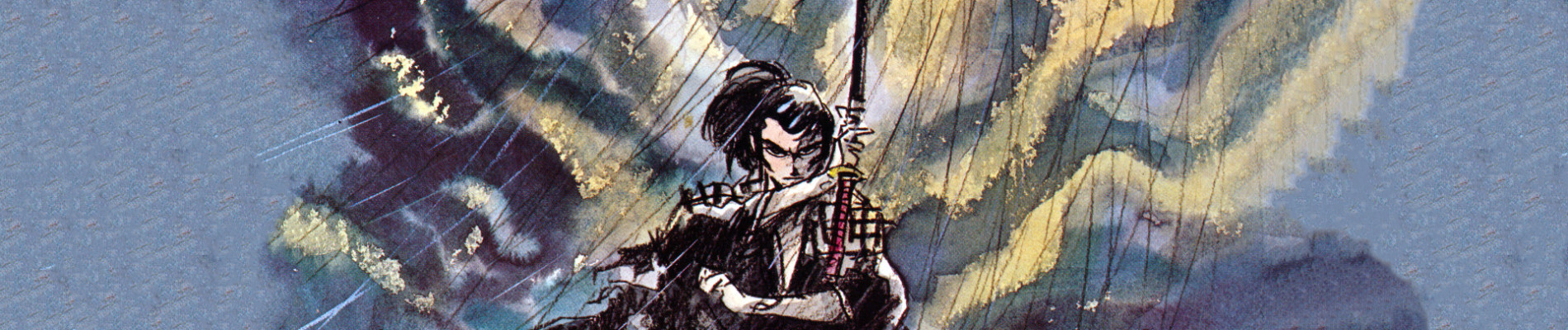
A Japanese manga artist and essayist known for his social criticism as well as his realistic drawing style and the characters in his scenarios. He is considered a pioneer of gekiga. The son of the Japanese proletarian painter Toki Okamoto, his dream to become an artist equal with his father started when he became a Kamishibai artist. He is also known for his work published in the early issues of the manga anthology magazine Garo in 1964, which he began publishing so as to serialize his comic Kamui.
He died on October 8, 2021 at the age of 89 due to pneumonia. His younger brother Tetsuji Okamoto, who had worked as his assistant and later drawing "Kamui Gaiden Part 2", had passed away 4 days later on October 12, 2021, also due to pneumonia.
Born in 1932 in Toyotama-gun (later Suginami-ku, Tokyo) in Tokyo Prefecture. As a child, he moved from place to place, including Kobe and Osaka, near Korean villages, due to his father's activities as a painter. He grew up during the resentful years of the war and some of these dark emotions come out in the nihilistic society depicted in his work that are essentially historical dramas centered on ninjas that shed historical light on Japan, criticize oppression and discrimination.
Shirato developed his style by making boards for Kamishibai shows, Influenced by the ukiyo-e of the pre-Meiji era, he diverged in his depiction of action scenes by a slow multi-phase cutting, unique to his style. He then had Goseki Kojima and Kusonoki Shouhei as his assistant, as well as his brother Tetsuji Okamoto.
In spring 1938, he returned to Tokyo from Osaka, and in 1944, he entered the private Nerima Junior High School (under the old system), but soon after the war intensified, he and his family evacuated to Nakashioda Village, O-ken-gun, Nagano Prefecture (near Yagisawa Station in Ueda City), where he attended the old system Nagano Prefectural Ueda Junior High School (now Nagano Prefectural Ueda High School). The surname of a soldier named from this old junior high school later became the origin of his pen name. In place of his father, who was suffering from Pott's disease due to the aftereffects of torture by the Special Higher Police (特別高等警察), he supports his household by doing forestry and hard work. After spending about a year in the salt pans, he moved to Sanada and then to Nishienden.